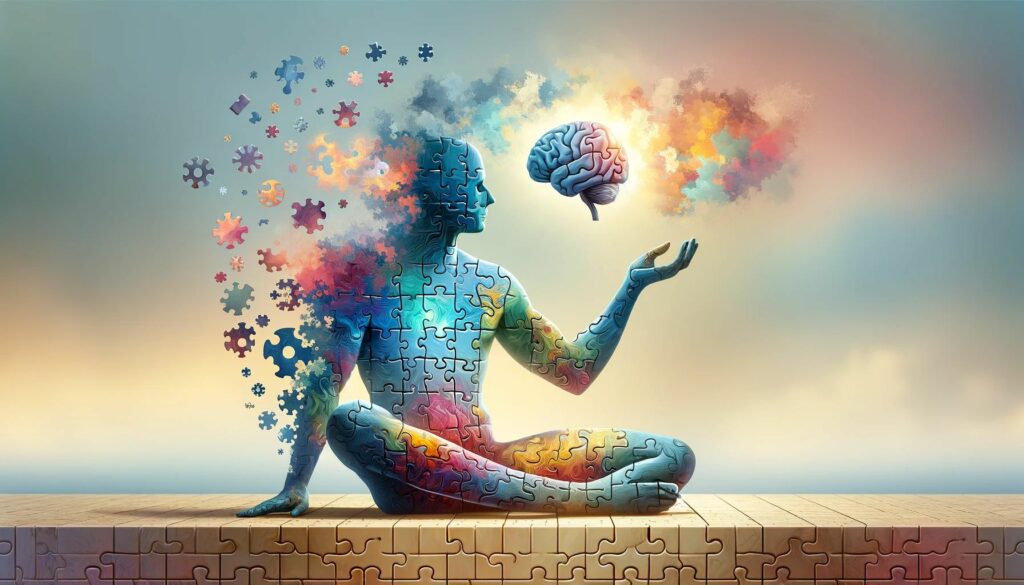
Mental burdens weighing down on your joints
Curious About the Mind Brain Connection? Here are 9 Facts
Your thoughts, feelings and beliefs can all contribute quite heavily to physical health (and probably the opposite is true too). You may be surprised to learn that Bodily functions can be highly influenced by the emotional/mindful state of the mind, which intertwines functionally and theoretically — we are now able to discover a more complex tapestry of the mind-body connection. This idea has puzzled scientists for centuries.
A Brief Summary on Joint Pain and Its Primary Reasons
IntroductionJoint pain is one of the most common medical conditions affecting millions of people worldwide. The reasons vary from arthritis, injury, age- overall wear of the joint. It is vital to know this root for an effective management and treatment.
Getting into the Idea of Psychological Factors Impacting Body Pain
The role of psychological factors in physical pain, especially in joint pain, is often neglected. Here is an article we found on how our mind and emotions can manifest as physical pain.
Understanding Joint Pain
Joint Pain: Meaning and its Different Types
Joint pain refers to discomfort, aches, and soreness in any of your body’s joints. The severity ranges from mild, irritating, to severe, debilitating even the slightest movement.
List of Well-Known Structural Causes for Your Joint Pain
Common offenders are osteo, rhematoid any arthritis bursitis gout. Joint pain is also commonly caused due to injuries like sprains and strains.
A Quick Guide On How Our Body Works In Terms of Pain
Pain Existence Pain detection is a complex process with many nerve and brain pathways involved. If a joint becomes damaged, signal from pain receptors travel along nerves to the brain where they are perceived as pain.
The Mind-Body Connection
THE PSYCHOLOGY OF PHYSICAL PAIN
The brain does not simply receive signals of pain; it responds both emotionally and psychologically. As a result, mental health can play a big role in how we process physical pain.
Cases: Psychosomatic Pain Manifestations
We know that the mind influences our pain response and there have been documented cases of instances where psychology has resulted in real pain.
Behavioural Psychology and Joint Pain
Joint Pain and Stress and Anxiety
Continued anxiety and stress can lead to the leftover muscle tension that is inflammatory and therefore, can increase joint pain. They also increase the sensitivity of the body to pain.
The Reciprocal Relationship Between Depression and Chronic Pain
But depression can also result from chronic joint pain and may exacerbate chronic joint pain by continuing the cycle of joint pain and depression.
The Impact of Emotional Trauma in Physical Conditions
Trauma transforms our lives both psychologically and physiologically — we may feel the effects in terms of joint and muscle pain or other forms of physical manifestation as a result of the body storing the traumatic experience.
Understanding the Psychology of Pain and Its Science
CONTENTS Neurology view: pain routes and the head
Psychosocial factors (the brain’s interpretation of pain signals) can modulate the strength and perception of joint pain.
Psychoneuroimmunology: The Relationship Between Mind and Immunity
This is the area of research that looks at how psychological stressors can influence immune functioning, which may in turn make arthritis worse and lead to increased joint pain.
RESEARCH SPOTLIGHT: Links Between The Mind And Joint Pain
Recent studies indicate a notable link between joint pain severity and mental health, with evidence for a bidirectional relationship.
Diagnosis Challenges
Why Psychogenic Joint Pain Blurs the Boundaries of It should not be surprising that when JOINTS are immobilized for long periods, they often become painful and stiff. However, increasingly, I am becoming aware that this pain can develop in seemingly normal joint and muscle sequences on the outside, posing a challenge to the physical healer. The backdrop, of course, is the interaction between mind and body, which has increasingly come into focus over the last 60–70 years. Biopsychosocial factors such as pain without pathology are increasingly popularized, as evident in literature describing non-organic joints and muscular systems. We all know that inflammation and pain are due to physical processes in the body, but psychosocial variables can influence the subjective experience of pain in discreet and ongoing ways. In fact, there have been distinct studies using neurologically sound methods that establish a clear and undeniable link between psychogenic factors and pain. Lower emotional intelligence, personality traits associated with neuroticism and, quite simply, being human, can all influence the experience of pain. Psychogenic joint pain is a mysterious term. It sounds terribly medical at first glance to conjure up something wrong with the mind, but we must remember that though psychogenic pain is experienced with the body, it is not actually a physical ailment. It is how the body and mind relate things that is wrong, not the joints and muscles per se.
It can be extremely difficult to discern pain with a physical basis versus psychosomatic pain, and generally a full evaluation is needed.
Differentiating Causation of Physical Versus Psychological Pain
Joint Pain Diagnostic Methods: Care Providers have to do physical exams and some other mental evaluations too in order to achieve joint ache origins properly and exactly.
How Holistic Patient Assessment is Important
To reach any kind of definitive diagnosis and proper treatment, a crash program must take into account not just the spot of discomfort, but your whole the body, each physically and mentally.
Treatment and Management
Conventional Treatments for Painful Joints
There are medication, physiotherapy, and surgery in some cases —all methods target the physical part of joint pain.

Psychological treatments: Cognitive Behaviour Therapy, mindfulness etc.
Other psychological therapies such as mindfulness (an approach that alters how one perceives and copes with pain) and cognitive-behavioral therapy (CBT) are effective at managing pain.
Pure Foods: Stressed Out? Well, Oatmeal Really Does Cure All
Managing joint pain in a wider context can actually be done through lifestyle changes — making adjustments that will reduce stress and improve emotional health can go a long way in making life easier with joint pains.
Experiences: Voices from the Patient Community
Qualitative Interviews of Patients with Joint Pain Cognitively Induced
Such stories shed light on the practical implications of the mind-body connection through a lens of joint pain and its alleviation.
Healing from Pain Psychologically ACCEPTED EDITORIAL 4 |Professional Success Stories
True stories of people who ended joint pain by healing the psyche and emotions
Expert Opinions
INTERVIEWS WITH HEALTHCARE PROFESSIONALS
Translation of medical experts on new research and treatment of joint pain shaped by psychology
New Muse: Psychologists, Rheumatologists Examine Link Between Mind, Body in Joint Pain
The Following Experts Explain How Mental Health Ties Into Joint Pain, So You Have A More In-Depth Understanding Of This Complex Relationship
Preventive steps and good habits
How to Keep Your Joints Healthy
Advice such as how to maintain a balance of physical activity with diet and appropriate lifestyle measures to sustain healthy joints and help curb the pain are provided in a practical context.
Tips on Ensuring Mental Wellbeing to Prevent Psychosomatic Symptoms
Methods and practises to improve mental health, which decreases the chances of psychosomatic joint pain
Conclusion
Recap: The Mind-Body Connection in Joint Health
The key takeaways from the discussion outline the link between mental health and physical health in terms of joint pain.
Advocating a multidimensional strategy for joint pain relief
The final note advises readers to take into account both physical and psychological factors as they work toward joint pain control.